
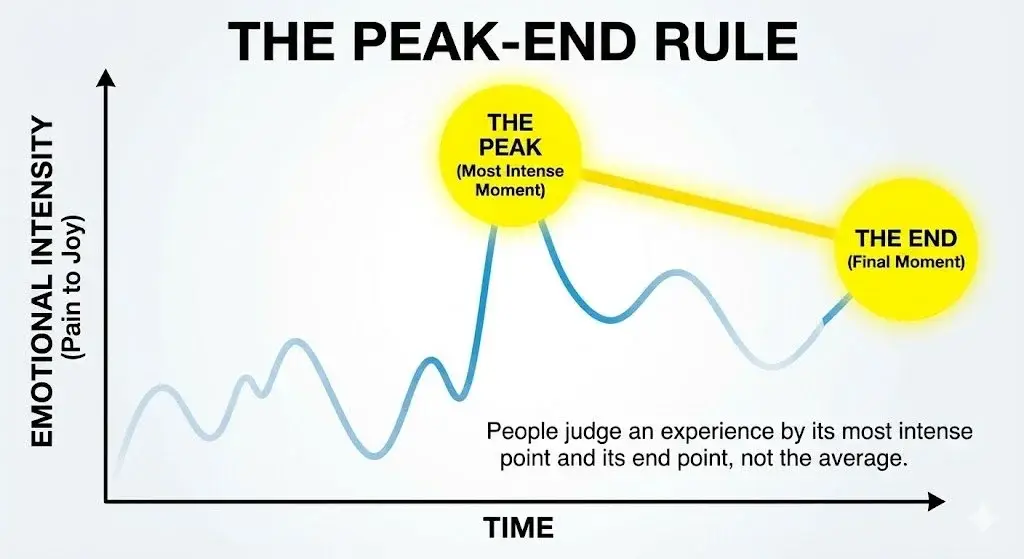
The Two Selves
Daniel Kahneman argues that we have two selves:
- The Experiencing Self: Lives in the moment. Feels every second of frustration or joy.
- The Remembering Self: Keeps the score.
The Remembering Self is a tyrant. It deletes 99% of the experience and only keeps the highlights. Specifically, it keeps the Peak (the highest emotional point) and the End. If you have a 5-star dinner but the waiter is rude when bringing the bill (The End), you will remember the dinner as “terrible.”
The “Disney World” Paradox
Think about a trip to Disney World.
- The Experience: 90% of the time is spent standing in hot, sweaty lines (Misery). 10% is the ride (Joy).
- The Memory: You remember the thrill of Space Mountain (Peak) and the fireworks at night (End).
- The Result: You book another ticket for next year. Disney engineers the Peak-End rule perfectly. They ensure the finale (Fireworks) is spectacular to wash away the memory of the queues.
How to Apply This to Product
1. The “Success” State (Mailchimp) Sending a marketing email is stressful. You are afraid of typos. You are sweating. When you hit send, Mailchimp shows a literal “High Five” animation from a monkey.
- The Peak: The anxiety of sending.
- The End: The relief and high-five. They transformed a stressful moment into a moment of shared triumph.
2. The “Error” State (Chrome Dinosaur) When the internet goes down, it’s a high-negative peak. Google Chrome turns “The End” of the browsing session into a game (The Dinosaur Run). Instead of ending on frustration, you end on a small moment of play.
3. The “Cancellation” Flow (Offboarding) Most SaaS companies make cancelling hell. They hide the button. They argue. This creates a Negative End. That user will never return and will tell their friends you are a scam. Better Strategy: Make cancelling easy. Say, “We are sorry to see you go. Your data is safe if you ever want to come back.” Leave the door open with a positive final memory. They might return in 6 months.
Conclusion
Stop looking at your analytics averages. “Average Session Duration” lies to you. Look at the emotional spikes. If your product is buggy and slow, but you solve the user’s problem in a spectacular way at the very end… they will forgive you.
The Takeaway: You can’t fix every moment of friction. But you must fix the ending. Always end on a high note.