
There is a famous quote by Jim Barksdale, the former CEO of Netscape: “There are only two ways to make money in business: One is to bundle; the other is to unbundle.”
As Product Managers, we are trained to focus on the “Unbundle” phase—creating specific, best-in-class solutions for specific problems (like Slack for chat, Zoom for video, Jira for tickets).
But as you move into Executive Leadership (Director/CPO), the pendulum swings. The P&L demands efficiency, and efficiency almost always comes from Bundling.
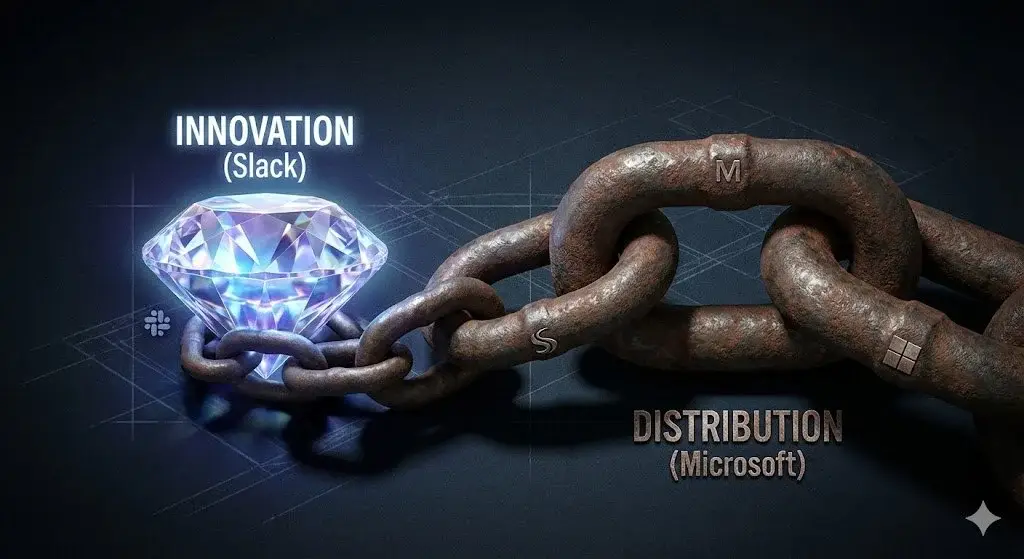
The battle between Slack and Microsoft Teams is the definitive lesson on why Distribution Strategy eats Product Strategy for breakfast.
The P&L Reality: Innovation vs. Distribution
In 2016, Slack had 90%+ gross margins and hyper-growth. But they had a fatal flaw in their P&L: High Customer Acquisition Cost (CAC).
To win an enterprise client, Slack had to:
- Hire a sales team.
- Run marketing campaigns.
- Go through a security review.
- Convince the CFO to sign a new check.
Microsoft had none of these costs. They owned the “distribution rails” (Office 365). To “sell” Teams, they simply turned a feature flag on. Their CAC was effectively zero.
Lever 1: The “Zero Marginal Cost” Attack
When Microsoft bundled Teams into Office 365, they changed the purchasing decision from “Which chat tool is best?” to “Why pay for Slack when we already own Teams?”
The Strategic Lesson: If you are competing against a bundled incumbent, being “better” isn’t enough. You must be 10x better to justify the added friction of a separate invoice.
- Actionable Framework: Look at your product pricing. Are you charging for a feature that your competitor gives away for free? If yes, you are in the “Kill Zone.” You must pivot your value proposition to something the incumbent cannot bundle (e.g., neutrality, specialized integrations, or data privacy).
Lever 2: Defensive Moats & Churn Reduction
Bundling isn’t just about killing competitors; it’s about saving your own P&L from churn.
When a customer buys a single product (e.g., just a subscription to Word), it’s easy to cancel. But when they rely on a bundle (Word + Excel + Teams + SharePoint), the Switching Costs become astronomical.
The Strategic Lesson: As a Director of Product, stop thinking about standalone features. Start thinking about “Suites.”
- The Metric: Look at Attach Rate. What percentage of your customers use more than one of your products?
- The Move: If you have a high-churn product, bundle it with your low-churn “anchor” product. Even if you discount the price, the increase in Lifetime Value (LTV) due to reduced churn will positively impact the P&L.
Lever 3: The “Good Enough” Threshold
This is the hardest pill for Product Purists to swallow. Teams was objectively worse than Slack in 2017. It was slow, buggy, and ugly. But it didn’t matter.
In B2B Economics, the buyer (CFO/CIO) is rarely the user. The buyer cares about:
- Security/Compliance.
- Cost consolidation.
- Vendor consolidation.
Microsoft hit all three. Slack only hit “User Experience.”
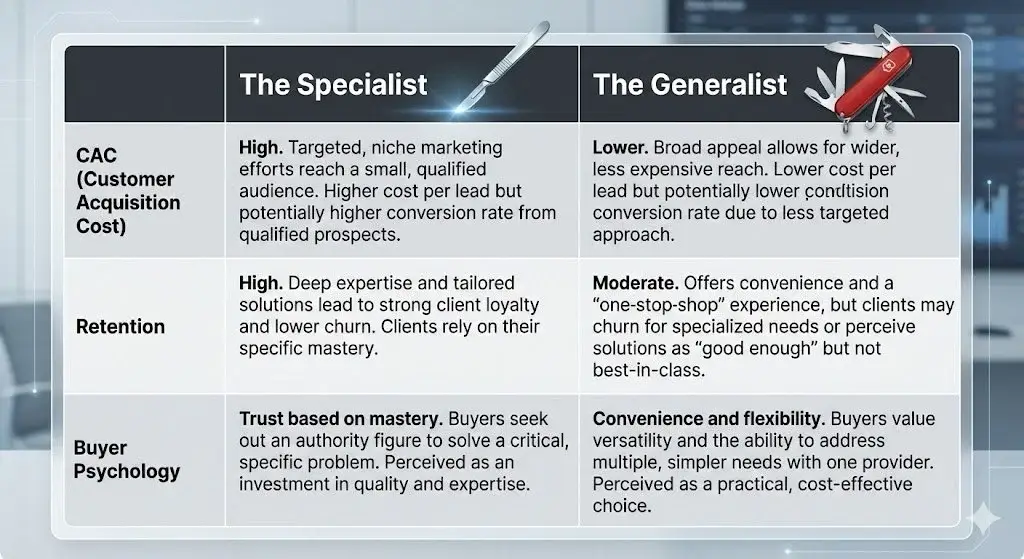
| Strategy | Product-Led (Slack) | Distribution-Led (Microsoft) |
| Primary Goal | User Love (NPS, Daily Active Users) | Buyer Efficiency (TCO, Vendor Consolidation) |
| Customer Acquisition | High CAC: Sales & Marketing required for every deal. | Zero CAC: Upsell/Cross-sell to existing base. |
| P&L Impact | High Margins / High Churn Risk: Easy to cancel if a better tool appears. | Lower Margins / High Retention:“Golden Handcuffs” effect. |
| When to use it? | When you are the Challenger redefining a category. | When you are the Incumbent defending a category. |
The Strategic Lesson: Don’t over-invest in UX if you are failing on “Buyer Value.”
- The Framework: Map your roadmap items to User Value vs. Buyer Value.
- User Value: Dark mode, faster load times, emoji reactions. (Retains users).
- Buyer Value: SSO, Audit Logs, Bundled Pricing, RBAC. (Closes deals).
- The Audit: If your roadmap is 90% User Value, you are building a great toy, but a risky business.
How to Apply This (If You Aren’t Microsoft)
You don’t need to be a tech giant to play the bundling game.
- The “Mini-Bundle”: If you have a core product and an add-on, stop selling the add-on separately. Bake it into a higher tier plan. You sacrifice short-term add-on revenue for long-term retention (higher NRR).
- Partner Bundles: If you lack distribution, partner with someone who has it. (e.g., “Spotify bundled with Uber” or “Disney+ bundled with Verizon”).
- Pricing Power: Use bundling to mask price increases. Raising prices by 10% is hard. creating a “Pro Bundle” with 2 extra features and raising the price by 20% is strategy.
Final thought for the C-Suite: Innovation gets you into the game. Distribution wins the game. Check your roadmap today: Are you building a diamond, or are you building a chain?