The Asymmetry of Value
Imagine I offer you a coin flip.
- Heads: You win $20.
- Tails: You lose $20. Would you take the bet? Most people say No.
What if I change it?
- Heads: You win $40.
- Tails: You lose $20. Most people still hesitate.
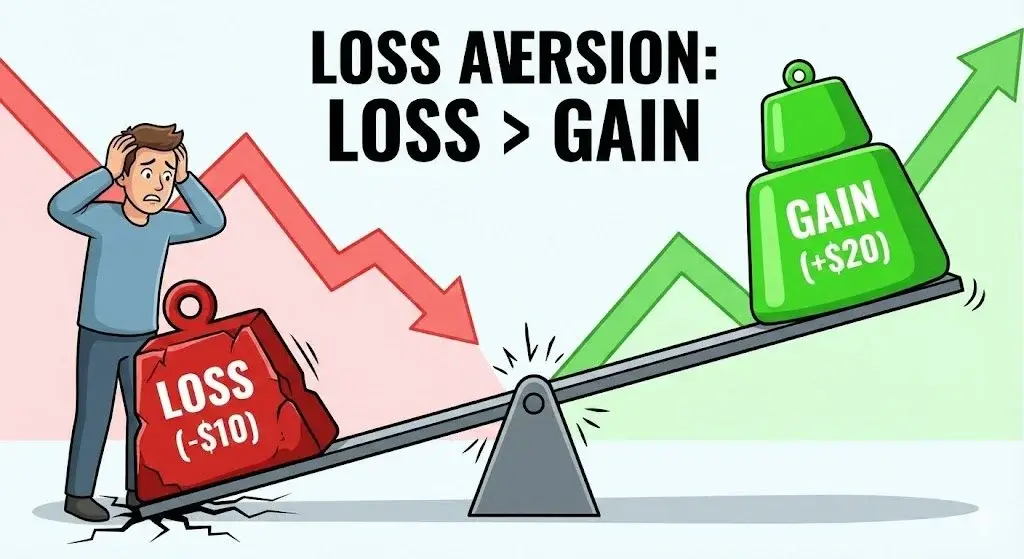
Mathematically, this is irrational. The “Expected Value” is positive. Psychologically, it makes perfect sense. The pain of losing $20 outweighs the joy of winning $40. We are hardwired to protect our resources.
The Endowment Effect
Loss Aversion leads to the Endowment Effect: We overvalue things simply because we own them. This is why the Free Trial model works so well in SaaS.
- Before the Trial: The software is “yours” (the company’s). The user assesses it critically. “Is this worth $10?”
- During the Trial: The user customizes it. They upload data. It becomes “theirs.”
- End of Trial: The question is no longer “Do I want to buy this?” The question becomes “Am I willing to lose this?”
The shift from “Buying” to “Not Losing” is the key to conversion.
How to Use Loss Aversion in Product Design
1. The “Streak” Mechanic (Retention) Snapchat, Duolingo, and fitness apps use streaks to weaponize loss aversion. The user isn’t coming back for the content; they are coming back to protect their investment (the number of days).
- Tip: Give users a “Streak Freeze” or repair tool. If they lose a 100-day streak due to a bug, they will quit your app forever out of heartbreak.
2. The “Pre-Filled” Progress Bar (Onboarding) If you give a user a punch card with 10 slots, they are slow to start. If you give them a card with 12 slots, but 2 are already stamped, they are much more likely to finish. Why? Because they feel they have already “gained” progress and don’t want to waste it.
3. Framing Your Value Proposition (Copywriting) Review your landing page copy.
- Gain Frame: “Get $500 off your energy bill.” (Weak).
- Loss Frame: “Stop throwing away $500/year on wasted energy.” (Strong). Humans will jog to get a prize, but they will sprint to escape a fire.
The Ethical Warning
Loss aversion induces anxiety. Using it for everything (e.g., “3 people are looking at this hotel room right now!”) creates Dark Pattern fatigue. Use it to help users achieve their goals (learning a language, saving money), not just to pad your metrics.
Conclusion
If you want users to take action, don’t just show them the carrot. Show them the stick. Or better yet, show them the carrot they already have, and threaten to take it away.