
The 1969 Experiment
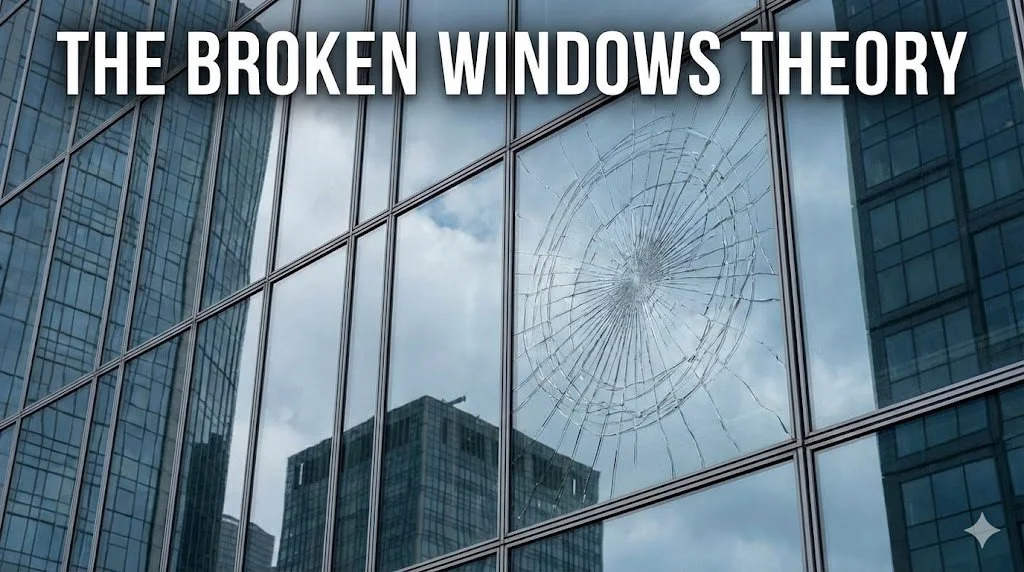
In 1969, Stanford psychologist Philip Zimbardo parked a car in a rough neighborhood in the Bronx and left the hood open. Within 10 minutes, it was stripped for parts. Then, he parked a pristine car in a wealthy neighborhood in Palo Alto. It sat untouched for a week. Then, Zimbardo took a hammer and smashed one window of the Palo Alto car.Within hours, the wealthy neighbors tore the car apart.
The lesson? Neglect is contagious. It doesn’t matter how “nice” the neighborhood (or the codebase) is. Once the first sign of rot appears, standards collapse instantly.
Software has “Windows” Too
In Product Management, “Broken Windows” are the visible, low-priority issues we ignore:
- A typo in an error message.
- A loading spinner that isn’t centered.
- A dead link in the help footer.
- Inconsistent font sizes.
We call this “Visual Debt.” We often deprioritize it because “it doesn’t block functionality.” But it blocks Trust.
The Two Consequences of Rot
1. The User Consequence (Loss of Trust) Users judge a book by its cover. If your UI is sloppy, users assume your security and backend are sloppy too. If I see a banking app with a typo on the login screen, I am not depositing my money there. I don’t care how good the encryption is; the “Broken Window” signals incompetence.
2. The Team Consequence (Loss of Pride) This is the hidden killer. Engineers want to work on things they are proud of. If a PM says, “Don’t worry about that glitch, just ship the next feature,” you are telling the team that Volume matters more than Quality. Once engineers stop taking pride in their craft, “Spaghetti Code” takes over. The best engineers leave (because they hate working in a messy environment), and you are left with a team that is comfortable with mediocrity.
The Solution: The Boy Scout Rule
How do you stop the rot? You adopt the Boy Scout Rule:
“Always leave the campground cleaner than you found it.”
- Zero Tolerance for UI Bugs: Reserve 10% of every sprint for “Polish.”
- The “Janitor” Rotation: Have one developer per sprint whose only job is to fix the small, annoying things that nobody else has time for.
- Stop Shipping “Known Bugs”: If the window is broken, don’t build a new floor on top of the building. Fix the window first.
Conclusion
Excellence is not an act; it is a habit. And habits are formed in the details. Fix the typo. Align the button. Repair the window. Show your team (and your users) that you care about this building.